Sunday, March 18, 2007

It Ain’t Over Til the Fat Man Signs, Oops! The Fat Lady Sings

What’s Wrong With This Picture?

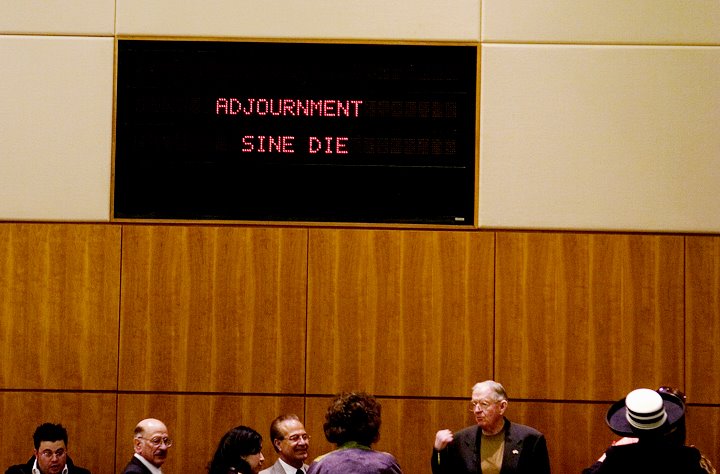
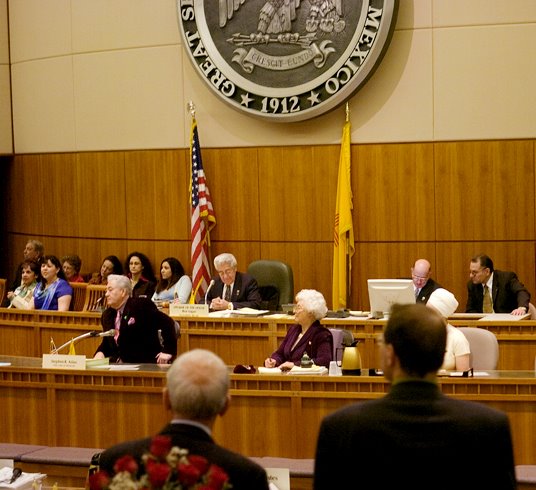
This is the end of the 60-day session of the 48th legislature for the State of New Mexico.

As the clock neared noon, both houses notified the Governor that they had completed their duties and were headed home.

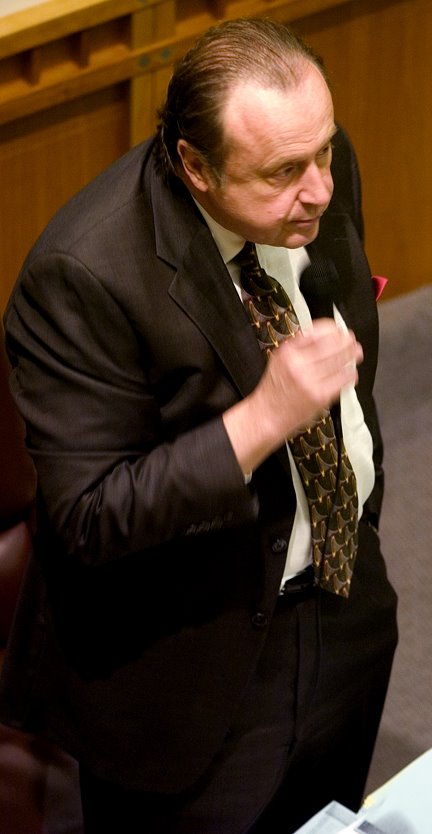
There was a last minute effort to pass a campaign contribution limits bill. Lt. Gov. Diane Denish ruled that the Senate had passed a bill by a voice vote. There was a demand for a roll call and Sen. Joe Carraro, R-Sandoval, changed his vote at the last moment from being in favor to being against. The Lt. Gov’s. declaration that the measure had passed was overruled and the bill died 20-21.

Carraro, seen here on the left and Denish had clashed Friday when the Lt. Gov., acting as president of the Senate, called for the sergeant at arms to remove Carraro. This was done when Carraro called Sen. Michael Sanchez, D-Valencia, a liar for his characterization of one of Carraro’s comments.

So what’s wrong with this picture?

Not so, quick!

Within 20-minutes, Gov. Bill Richardson announced that he was calling a special session, to start Tuesday, because he will be out of state, politicking for his presidential run, Sunday and Monday.

So get the flags back out.

Richardson wants some issues that were left stalled in committees brought forward and debated.

The list includes road construction, more ethics reform, rights for non married heterosexual and same sex partners, according to fellow bloggers and newspaper reporters who covered the Richardson press conference.

These include:
Santa Fe New Mexican’s Steve Terrell http://blogs.freenewmexican.com/terrell/2007/03/17/how-can-we-miss-you-when-you-wont-go-away/,
Albuquerque Tribune’s Kate Nash http://blogs.scripps.com/albq/state/2007/03/three_hours_left.html,
Albuquerque Journal’s Trip Jennings and Jeff Jones http://www.abqjournal.com/xgr/547748xgr03-18-07.htm (subscription)
and Heath Haussamen http://haussamen.blogspot.com/.

Seen here from left to right are: Matt Grubs, Santa Fe Bureau Reporter for KOAT TV, Albuquerque Journal’s Trip Jennings and Jeff Jones, Santa Fe New Mexican’s Steve Terrell and Associated Press' Santa Fe Bureau Reporter Deborah Baker.

See you back in the press gallery Tuesday.

Friday, March 09, 2007

Sealed Indictments

What’s wrong with this picture?

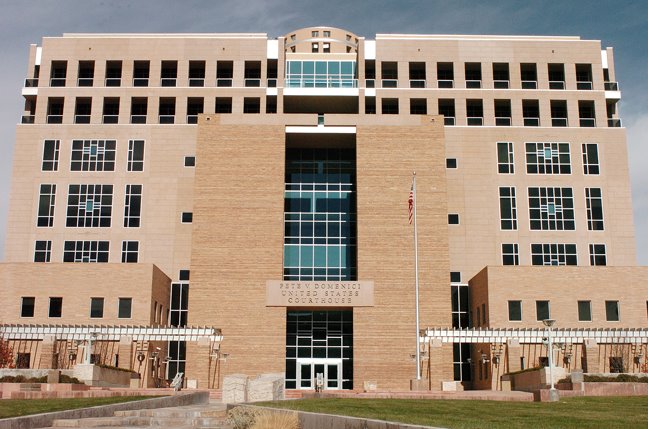
This is the Bernalillo County Metropolitan Courthouse. It is in the center of a political storm, the likes of which this community may never have seen.

The Federal Bureau of Investigations completed an investigation last summer into allegations of improprieties in the construction of this building and possibly the State District Court.

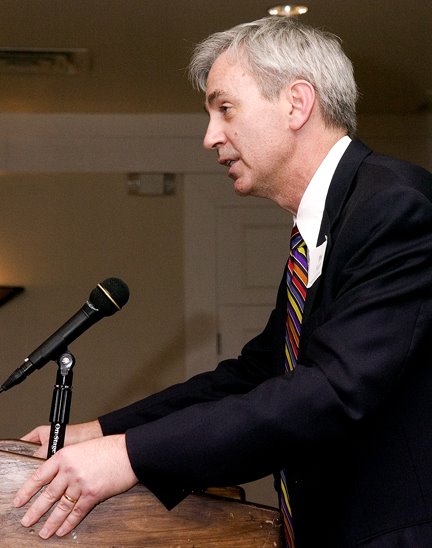
The then U.S. Attorney David Iglesias, right, a Senate confirmed political appointee, who had been recommended by N.M. Sen. Pete Domenici to President George W. Bush in 2001, sought and obtained indictments before a federal grand jury that have been placed under seal by the court while the criminal investigation continues.

Iglesias was asked to resign on Dec 7. Serving at the pleasure of the president, he stepped down and left office at the end of last month.

Department of Justice had released eight U.S. Attorneys from around the country. In seven cases, Justice officials cited performance failures as the reason for the dismissals. San Diego Based U.S. Attorney Carol Lam, who had successfully prosecuted Republican Rep. Randy “Duke” Cunningham for corruption, was also released. In the eighth case, H.E. "Bud" Cummin was removed to make room for Tim Griffin, a former aide to top presidential political advisor Karl Rove. The Washington Post reports that Griffin will not seek appointment to the position.

Iglesias charged that his departure was due to political pressure applied by N.M. Republicans Rep. Heather Wilson, left, and Domenici in trying to spur the release of the sealed indictments prior to the November 2006 election. Wilson was running behind in the polls to her challenger, Democratic New Mexico Attorney General Patricia Madrid.

Iglesias said he would not have broken his silence if Justice officials had not attacked his office and the professionalism of his career staff.

Iglesias testified Tuesday before the Senate Judiciary Committee and the House Judiciary Subcommittee on Commercial and Administrative Law. The judiciary committees are looking into the independence of the U.S. Attorneys.

Wilson and Domenici had made phone calls last fall that Iglesias would later feel were inappropriate attempts to exert influence in releasing the sealed indictments. This was just prior to the election. Iglesias felt it might have been an effort to help Wilson in the election, which she eventually won by less than 900 votes.

According to Iglesias, Wilson asked specifically about the sealed indictments and Domenici wanted to know if they would be released prior to November.

The congressional contacts could be considered violations of the law as interference in the administration of or obstruction of justice. Ethics complaints in both houses of congress are sure to ensue and will take their course.

Republican attorney Pat Rogers, right, who is a major supporter of Wilson, is shown here introducing her at Domenici’s recent announcement running for a seventh Senate term. According to the Albuquerque Journal, Rogers said that he had met Iglesias in October and thought he was out of touch with the community’s questions of why Iglesias was not moving forward.

So what’s wrong with this picture?

Sealed indictments during an on-going investigation. What can that mean?

Law enforcement officials and lawyers generally understand the underlying meaning of sealed indictments, but the layman might not. An indictment is a formal criminal charge brought as a result of a grand jury that convenes in secret.

A Grand Jury has two tasks: to determine, using the test of probable cause, that a crime has been committed, and that a particular person probably committed the crime. On a scale of one to 100, probable cause may represent as low as a 35 percent probability of guilt. A conviction of a criminal case requires proof beyond a reasonable doubt, or somewhere in the high 90-percentile level.

A prosecutor may have reason to believe that one or more persons are involved in a crime. Law enforcement officers might be able to gather sufficient evidence to indict one or more suspects. However, they might not have enough evidence to charge others who are believed to be involved.

In the hypothetical, let’s take a public corruption scenario. Indictments with sufficient evidence are obtained for minor crimes or for low-level co-conspirators. There is some evidence, but not enough to indict others, who maybe even higher-level participants, the main conspirator or the target of the initial investigation.

If the low-level co-conspirators are publicly identified, the ability to pursue the higher level offenders may be compromised.

The prosecutor is not the only player in the decision to seal indictments. There is a judge, usually the one supervising the grand jury, who actually seals the indictment. The prosecutor is required to explain the need for sealing the indictment to maintain secrecy during the ongoing investigation.

Keeping the earlier obtained indictments under seal allows for law enforcement or the prosecutor to continue the probe.

In this case, there is a great deal of speculation, rumor and even some evidence revealed through court documents, of the width and breadth of the investigation and some of the parties involved.

A list of some of the rumored alleged participants might read like the who’s who of the local Democratic Party.

Local Republicans, their operatives and bloggers seemed to salivate at the prospect of having a Republican U.S. Attorney leading the prosecution against Democratic rivals.

Iglesias had indicted two, back-to-back Democratic State Treasurers, Michael Montoya and Robert Vigil, on charges of public corruption including soliciting and collecting bribes, kickbacks and racketeering. Several other co-conspirators were indicted and entered plea agreements to one count only in exchange for their testimony against Vigil.

Vigil was tried and a jury was unable to come to a unanimous finding when a lone juror was not convinced of his guilt. A mistrial was declared and a retrial scheduled.

Then Democratic New Mexico Attorney General Patricia Madrid, right, stated her displeasure with the plea arrangements and indicted the co-conspirators. She did not indict Vigil.

Madrid, the Democratic candidate for the N.M Congressional District 1 seat held by incumbent Wilson, had not waived state immunity. In such cases both the state and federal governments may independently prosecute. The lack of state immunity and the state indictments made prosecution difficult for the U.S. Attorney. The co-conspirators were unwilling to cooperate in the federal case because their testimony could be used against them in the state’s prosecution.

Republicans cried foul.

At the retrial, Vigil was convicted of a single count of the 24-count indictment. He was convicted of attempted extortion and received a three-year sentence to federal prison.

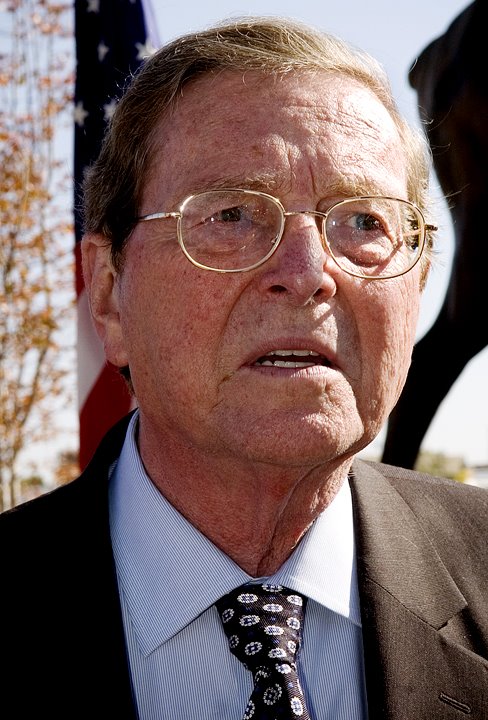
The blogging world and Republican operatives seem to want to make a great deal about the fact that the courthouse indictments remain sealed. They seem to ignore the context that there is an ongoing criminal investigation. Some bloggers, who have a history of spinning for the Republicans in general and Wilson in particular, have reframed the issues into attacks on Iglesias and Madrid, in an effort to deflect responsibility that belongs to Wilson and Domenici, left. There is plenty of blame to go around. Iglesias failed to notify his superiors of the contacts. He told congress it was a mistake borne of a misguided sense of loyalty to his mentor, Domenici, and political ally Wilson.

It seems that the operatives believe that the sealed indictments represent a complete and fully prosecutable case. Perhaps they feel that, upon their revelation, all the alleged offenders should immediately plead guilty to every count, which would result in a political implosion.

Iglesias’ office successfully prosecuted the state treasurer scandal. Republicans admittedly are disgruntled with the lack of more felony convictions and longer sentences.

One has to wonder what the Republicans state of mind would be if the sealed courthouse indictments revealed only some low-level functionary and the big fish would then be able to capitalize on the opening of the charges and avoid prosecution all together.

The possibility of not making a successful case against the perceived high-level Democrats rumored to be involved in the courthouse investigation, because of a premature release of indictments, would surely cause a greater outcry than currently exists.

The actions by Wilson and Domenic may be perceived and argued by those eventually charged in the courthouse case that allegations were politically motivated.

The U.S. Attorney will again have an unnecessary complication to overcome.

Iglesias testified at the House Judiciary Subcommittee that, when interviewed by then Attorney General John Ashcroft, he was told that politics stops at the door.

What would be the irony if Domenici were to have to go through the door of the federal courthouse in Albuquerque that bears his name?

Loyalty Above All Else; Except Honor

What’s wrong with this picture?

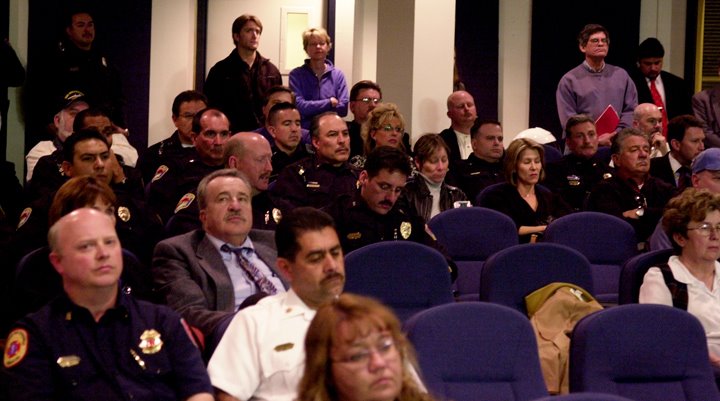
This is the police peanut gallery in council chambers Tuesday night at a town hall meeting of City Councillors hosted by Brad Winter, billed as a Red Light Camera Discussion. Eight of the nine councillors attended; Martin Heinrich was not present and Craig Loy left due to a family emergency. Chief Ray Schultz offered a video presentation of the City’s Safe Traffic Operations Program referred to as the STOP ordinance.

According to Eye on Albuquerque blog spot http://eyeonalbuquerque.blogspot.com/2007/03/circle-wagons-around-cash-cow.html, the brass, those Albuquerque Police officers whose rank is signified by metal insignias on their collars: lieutenants and captains, were apparently ordered to attend the meeting by a deputy chief. The three deputy chiefs, along with the civilian Executive Chief, Joe Bowdich and the Deputy Chief Administrative Officer for Public Safety, Nick Bakas, were also present.

They appeared in mass, most in uniform, supporting the use of red light and radar cameras as a political cause. This “show of support” was disconcerting. It became disturbing when the officers started applauding, whooping and hollering, each time a citizen spoke in support of the program. There was occasional booing when an opponent attacked the police involvement with the program.

I’m not aware of such a public gathering of so many uniforms, since Mayor Ken Schultz called together ranking police officers after the 1987 Black Rose incident, where unregistered police officer lobbyists had sent what was perceived as a threatening message to a state legislator for not supporting cops’ issues. Schultz read police the riot act reinforcing the prohibition of on-duty political activity and outlined the requirements for lobbying legislators.

Here Deputy Chief Michael Castro, center, and Public Information Officer John Walsh, right, are seen with Journal Staff Writer Dan McKay, “working the room,” in the glass enclosed media gallery where other journalists were also present.

Councillor Loy, right, a retired APD captain, sponsored the STOP ordinance. He said he brought forward this bill because he had seen too many fatal accidents and made too many death notifications, not to try anything to reduce deaths.

I witnessed a red light running, T-bone fatal crash when I worked the streets. I was unable to breathe life back into the instantaneously dead body of the drunken offending driver. There’re might be those who think that after such an experience, how I could not believe in anything that may help prevent such tragic events.

I might also. Except that, I do not believe that one throws out fundamentals and precepts of centuries old developed law. There is a mistaken belief that imposing and enforcing some Draconian laws will prevent such occurrences.

The continued existence of fatal accidents is as predictable as the sunrise.

It appears that if the city didn’t use the civil approach and had made the offenses traffic code violations, then there was no possible way to prove the case in Metropolitan Court to the standard of “beyond a reasonable doubt.”

Albuquerque Fire Chief Robert Ortega presented information about the reduction of serious injury accidents at intersections with cameras, including no fatal accidents.

It was disheartening to watch the police department’s command staff disregard their formal training in favor of supporting authoritarian rule over civil law. The presence and behavior of these officers smacked of the dreaded “us versus them” attitude officers are sometimes prone to exhibit.

Knowing my long-term opposition to using non-legal concepts in writing city ordinances, Councillor Winter asked that I forward my thoughts to him:

There are several levels of concern related to the automated enforcement provided under STOP: Purpose, Process and Law.

Red light violations and speeding are traffic problems within the community. They are not the only concerns, nor are they the most serious facing the community. It seems that DWIs and wrong way drivers are viewed in the public square as more dangerous.

Automated enforcement is clearly capable of raising a great deal of revenue and there is some evidence that the most serious accident rate intersections are not subjected to the use of the technology.

The general feeling of the community, especially by people who have been ensnared by automated enforcement, is the process of contesting the notice is not what the public expects. This is because they view the violation as a traffic offense and expect to have the right to go through the Metropolitan Court as a misdemeanor.

Some in the public do not perceive STOP as a proper use of the public nuisance abatement laws.

The City and its surrogate contractor, RedFlex Inc., who manage STOP, make threats that assistant city attorneys have told District Court judges they have no intention to follow through with, which are the seizure of offending vehicles.

Hundreds of cases have been dismissed because the City cannot accommodate the numbers of contested notices.

The public is becoming angrier and angrier.

There are some problems about jurisdiction:

The city has no authority over the administration of traffic offenses that would allow for the use of a City Administrative Hearing Officer in lieu of a state court.

State law provides that all misdemeanors, civil complaints and the enforcement of all municipal ordinances are within the exclusive purview of the Metropolitan Court.

The mayor has indicated that all of the more than $6 million generated so far, has gone back into the program. However, a quick check of the math, giving all inference to the City, the cost of this program would be several million dollars less than reported.

Winter announced that as a result of the town hall meeting, he plans to draft changes to STOP. The concerns he noted in a posting on the “Message from the City Council” page included: short yellow light time at camera intersections, fines and penalties that are excessive, and a flawed hearing process that fails to provide due process.

Thursday, March 01, 2007

Domenici

What’s Wrong With This Picture?

This is Pete Domenici, when he was president of the Albuquerque City Commission, March 28, 1969, throwing out the first pitch at the grand opening of the Albuquerque Sports Stadium.

Domenici had been a Lobo pitcher as an undergraduate at the University of New Mexico before his 1954 graduation. Fifteen years on, he was one of the few politicians I have seen, when throwing out a first pitch, not only was able to reach the plate but, actually threw with any accuracy. Another former college pitcher, alum of Tufts University and current politician who can throw, is New Mexico Gov. Bill Richardson. I understand that former Yale University baseball player and once owner of the Texas Rangers, President George W. Bush, has a good arm.

Last week Domenici announced his candidacy for a seventh, six-year term to the U.S. Senate amidst questions about his health. He turns 74, May 7.

As a matter of disclosure, I photographed Domenici’s 1970 campaign as the Republican candidate for governor when he lost to Bruce King.

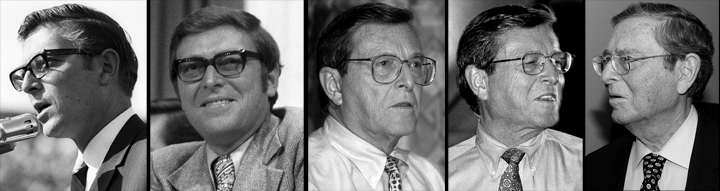
I’m not qualified to assess Domenici’s health, but I can, through photographs over the years, show evidence of his aging.

These five photographs span 37 years. The first frame was the same day as the above shot; the next was taken Jan. 19, 1973, when he was introduced as a newly elected Senator to Republican Party faithful.

I have more than a twenty-year gap in pictures. Though I saw and met with the Senator on several occasions, during this time, I was not actively photographing.

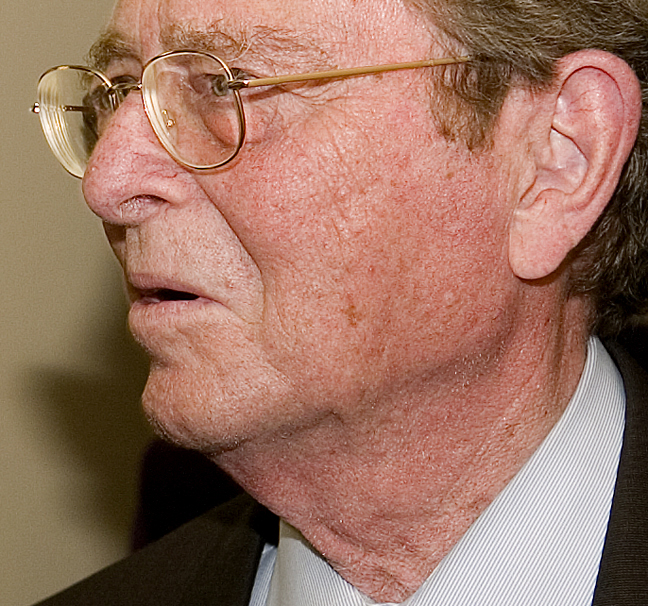
The center picture was taken Oct. 9, 1996, while he received the political endorsements from several Albuquerque area police officer organizations. The fourth frame was taken during Heather Wilson’s victory celebration of her special Congressional election, June 23, 1998, to fill the unexpired term of Congressman Steve Schiff who had died in office. The final picture was taken at the Nov. 1, 2006 dedication of the Department of Agriculture’s Forest Service’s newly consolidated Albuquerque Service Center for Human Capital Management Office.

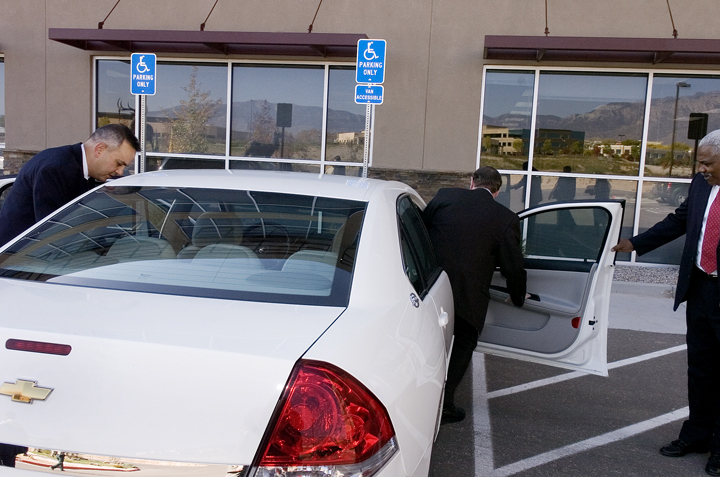
Upon closer examination of this picture, it seems that the senator hadn’t had a close encounter with his razor for a couple of days. He had a busy day; besides the new building event, he held a press conference, as described in the Dec. 5, 2006, posting, “Can We See Laura?” Domenici also had an orientation flight in the newly operational V-22 Osprey hybrid aircraft at the 58th Special Operations Wing at Kirtland Air Force Base.

Domenici’s aide parked the Senator’s vehicle in designated handicap spots. Domenici is not above seeking physical support, especially from Rep. Wilson over curbs and uneven walkways.

So what’s Wrong With This Picture?

Beyond the apparent frailty that is creeping up on him, he is lucid and sharp of wit and has a command of his legislative duties. I leave it to my readers to judge for themselves the state of Domenici’s health and ability to run and serve.

He might not still have the arm to throw, but as I see it, he’s still playing hardball.

Monday, February 19, 2007

Just Getting Older

What's wrong with this picture?

I visited the State legislature a couple of weeks ago and wandered into a phenomenon that helps put definition to the slogan that the City of Santa Fe uses; the city different. I walked into the rotunda of the state capitol.

In the building dubbed “the merry roundhouse,” by the late radio newsman/commentator Ernie Mills, one might want to say that, with what can sometimes only be described as legislative antics of the House and Senate, there is a third ring; the rotunda.

It is the public square, albeit round. Groups wanting to display their influence are granted use of the room to show support or to protest their interests during the session.

The activities are often coordinated and accompanied with speeches, drama, song, and dance. Sometimes there are delicious refreshments served. At other times, you’re lucky to get a stale cookie.

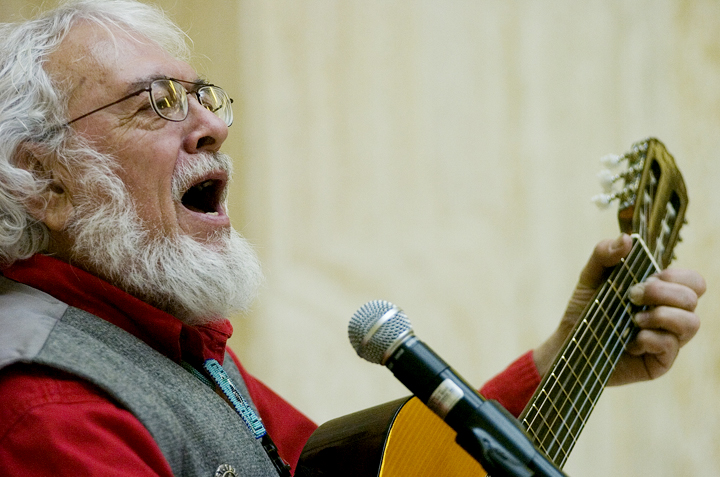
This is former Lt. Gov. Roberto Mondragon in the rotunda on “Native American day,” as he spoke about the importance of water to New Mexicans, then played a guitar and sang for the assembled crowd.

Mondragon served as State Representative from Bernalillo County from 1967 to 1970, then with Gov. Bruce King from 1971–1974 and again from 1979–1982.

Mondragon ran in the Democratic primary for U.S. Senate in 1972, as Democratic candidate for U.S. House of Representative in 1974 in the original 1st District, before there was a third district, representing the northern part of the state, losing to incumbent Manuel Lujan Jr. He then ran again in 1982 in the Democratic primary for U.S. House of Representative in the 3rd District, which was then held by current Gov. Bill Richardson.

Mondragon also ran for governor in 1994 and also ran for state representative from Santa Fe County in 1996 as a green party candidate, getting just over 10 percent of the vote.

Mondragon currently serves as Special Water Projects Coordinator in the Office of the State Engineer and Interstate Stream Commission. He specializes in acequia programs, and other water projects

According to a State Engineer’s press release announcing Mondragon’s hiring last year, he had also served as Director of the New Mexico Commission on Aging from 1975 to 1978, and was Director of the State Housing Authority in 1983.

Mondragon is a living cultural icon, a walking font of historic knowledge. He has worked with non-profit and profit-based organizations spreading New Mexico’s culture through bilingual programs. He is also an accomplished musician and uses song to impart his message.

So what's wrong with this picture?

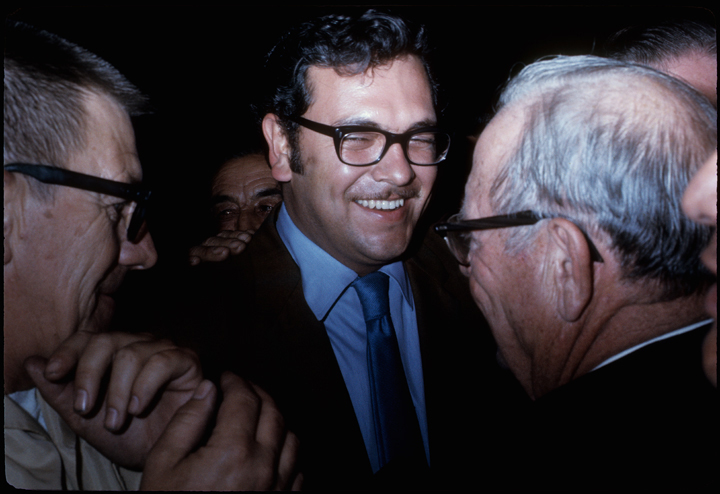
This is election night 1970, when Mondragon learned that the local television stations had just projected that he and King had been elected. He looks like a kid; he probably was.

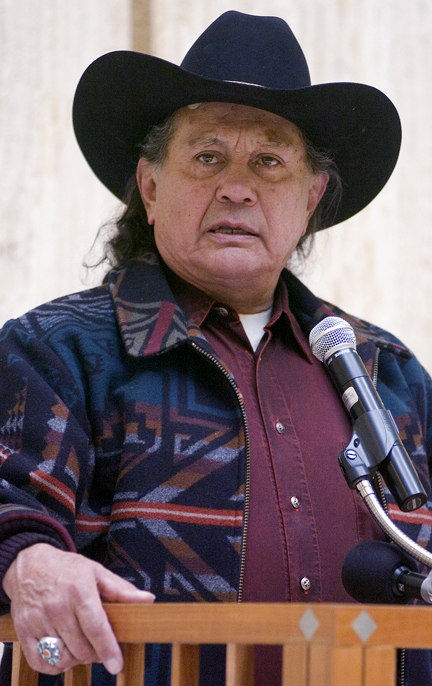
This is Russell Means of San Jose, N.M. This was the first time I photographed Means, though I have followed his politics back to the early 1970s, when he was a prominent leader of the American Indian Movement. AIM was known for several high-profile acts of civil disobedience, taking over public places including, Mount Rushmore, S.D. in 1970, Wounded Knee on the Pine Ridge Indian Reservation, S.D. in 1973, and the Bureau of Indian Affairs offices in Washington, D.C. in 1973.

Means has a more mainstream political history, having formally run for the presidency of the Oglala Sioux tribe in 1974. He was defeated, but due to massive voter fraud, a federal court ordered a new election. The fraudulent government refused, and the court did not enforce its ruling.

Means unsuccessfully sought the presidential nomination of the Libertarian Party in 1987. In 2002, he ran for New Mexico governor as an independent, but the Secretary of State claimed he appeared 10-minutes after the deadline to file his paperwork and the State Supreme Court upheld the rejection.

Means is also known as an entertainer, having performed on television and in movies. He recorded two albums, started his own production company and wrote a best selling book: “Where White Men Fear to Tread, the Autobiography of Russell Means.”

When introduced at the rotunda, Means was credited with his film role as Chingachgook in the 1992 film adaptation of the James Fenimore Cooper novel, The Last of the Mohicans. The moderator, in introducing him, said, “that was another story.” Indeed it is, as I believe his moment of film fame was portrayed with the hardest believable hit ever delivered on film.

My associate and fellow blogger Joe Monahan calls “La Politico” an addiction. Monahan claims that when it gets into people’s blood, there is no known cure.

Mondragon seems blissfully content to try to spread the addiction, as well as Monahan does.

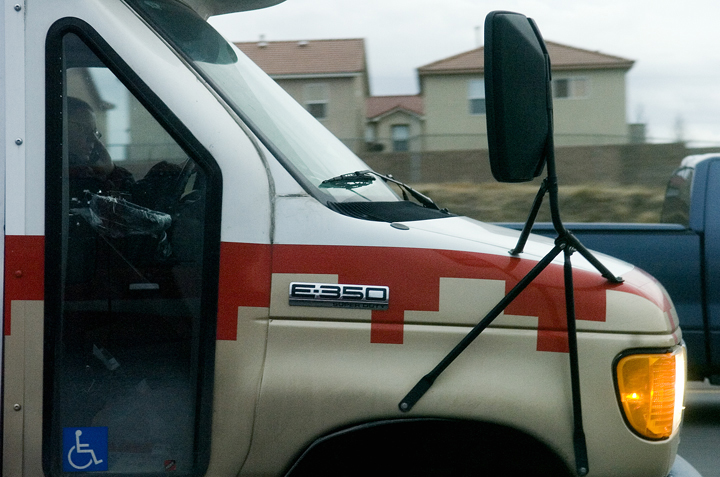
This is a picture of Monahan, on the left side, in the second row between the TV film cameras, taken at a press conference with Harris Hartz, of the Governor of New Mexico's Organized Crime Prevention Commission, Albuquerque Police Chief Bob Stover, Special Agent In Charge of the Albuquerque Field Office of the Federal Bureau of Investigations Forrest Putman and APD Dep. Chief Lane Vance, who was in charge of investigations in 1978.

What this makes me realize is that time marches on and we all are getting older.

Tuesday, February 13, 2007

Hello – Hello, I’ve Got To Say Goodbye!

What's wrong with this picture?

Over the past few days I have noticed, what I consider, a greater than usual number of drivers using hand held cellular phones while driving.

The ban on cell phone use was passed Feb. 5, at City Council on a 5-4 vote. Much has been made that the vote was cast along party lines in the nonpartisan chamber. I don’t think it much matters, after a major decision was made to make the offense punishable as a traffic code violation, instead of as a civil public nuisance, like the automated enforcement using red light cameras and photo radar vans.

Albuquerque Mayor Martin Chávez signed the bill into law Feb. 7, and the enforcement date will begin five days after publication. Publication occurred on Sunday, according to City Attorney Bob White who said in an interview that, like everything in City Hall there was a debate over whether the effective date was the fifth day or the day after the fifth day. “I settled that debate by just saying it’s the later date.” The effective date will be Sat. Feb. 17.

Chief of Police Ray Schultz also announced that talking on a cell phone would not be a primary reason for stopping a vehicle, according to Albuquerque Journal’s crime reporter T.J. Wilham in a copyrighted story. Unless an officer sees another violation while someone’s on the phone, talking will not be the sole reason to initiate a stop. Drivers should not put much stock in that though. When I worked the street many years ago, I read a study that said any driver would commit a technical violation once every mile driven. Since then, I think the level of safe driving has gone down, making it more likely that an officer may see a secondary offense. And because making the case against talking on the phone is so cut and dry, it will be an easy prosecution.

After the enforcement date, there will be a 30-day period where verbal warnings will be issued. There will then be another 30-day period where written warnings will be issued. According to APD Public Information Officer John Walsh, after the 60-days of warnings, citations will be issued.

My humble advice; don’t use your cell phone, it isn’t worth the risk.

So what's wrong with this picture?

This is a city transit driver driving an empty Sun Van west bound on Interstate 40 while talking on her cell phone. Mayor Chávez sent down an order banning the use of cell phones for city transit drivers. After getting this picture, I raised my camera again to take a safety shot and the driver held up her right hand to block her face. We were traveling in excess of 55 mph as she held her phone in her left hand. I can, at least, count to two; this means she had no hand available to hold on to the steering wheel.

I didn’t mean to cause her to try to hide and if I had so much as swerved my point and shoot photography might also be considered driver inattention.

Yeah, Sour Grapes

What's wrong with this picture?

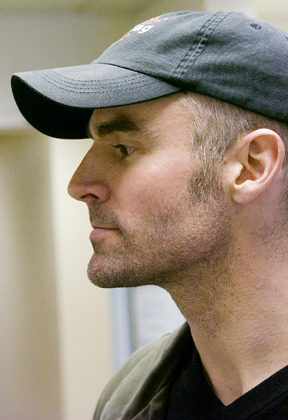
This is the new face of multi-media journalism, Michael Amedeo.

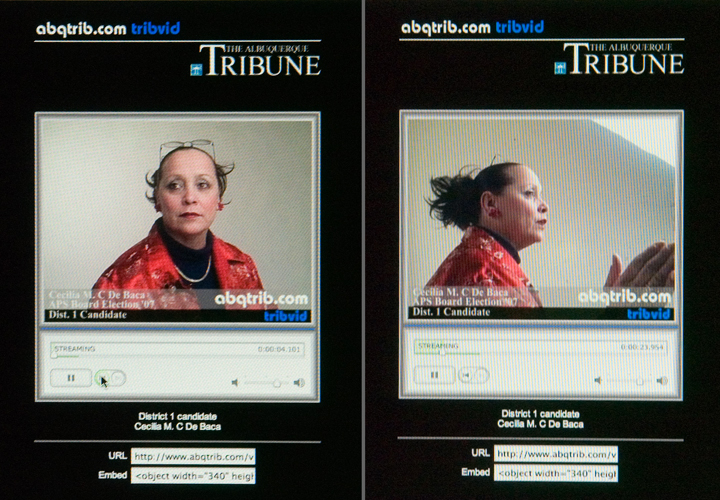
The Albuquerque Tribune http://www.abqtrib.com/ has started using video to augment their coverage, particularly with regards to interviewing candidates.

Editor in Chief Phill Casaus visited my intermediate reporting class at the University of New Mexico, last semester, on Oct. 24. He expressed an interest in adding an online video component to their Web site. This is an exciting proposition and an effective use of an emerging medium; web casting.

I gave him a resume and sent a portfolio, as I am interested in a part time job in the visual communications field. I thought that because the Tribune was going to limit its use of video, this would suit both of us well.

At the end of my cover letter, I wrote: “If you find yourself unable to offer any positions at this point, I would be available to consult with you about my ideas for developing a video component to the Tribune’s Web site.”

He demurred. Casaus said his reasoning for passing on my offer and resume was that he needed to consider purchasing equipment. He ignored the fact that I offered a package deal. This included my services and a studio in a box of state of the art equipment.

So what's wrong with this picture?

I was prepared to unleash on the Tribune’s efforts as being of amateurish quality. It probably was just sour grapes on my part.

I held off because the Tribune’s on-line video guru was scheduled as a guest speaker at my advanced reporting: multi-media class Wed.

Amedeo is a man who does not use his last name, Tumolillo and who, for the last four weeks, has been working on getting video on the Tribune’s web page, as an adjunct to their print edition. He is talking with my classmate, James W. Snyder at http://premwriter.blogspot.com/ and our professor Dennis Herrick after Amedeo’s presentation.

Amedeo related some of the technical problems with software he is attempting to overcome, especially with compression of video; making files smaller so they will easily show over the Internet.

He’s one of the young breeds: talented, smart, resourceful and full of energy.

He received a bachelor’s degree in English from the University of Oklahoma in 1998 and a Master of Science in Journalism from the Medill School of Journalism at Northwestern University in 2004, just before joining the Tribune staff as a reporter.

He’s one of those people who makes you pause and who unknowingly reminds you of your age. When you realize that you created your first video product three years before he was born, you look back on all your experiences, remembering how much you learned over such a very long period of time. The idea that going to school teaches one what they need to know is such a fallacy. Finishing school actually only prepares one to begin to learn, without the training wheels. I’m always amazed when I look back at all the things I’ve learned since the time I was led to believe I knew it all. What that view has taught me is the realization of how much I must not know and how little of it I’m likely to learn.

As I review the Tribune’s video work, I offer the following critique:

There are three areas: composition/ framing, lighting and sound, that are of major concern.

The Tribune’s school board candidate interviews show a progression of a trial and error learning curve.

The fact that well qualified still photographers were pressed into service is a start. However, they fell down on the basics of lighting an interview, by failing to follow the three-point or Rembrandt’s golden triangle lighting technique.

These interviews were over lit, especially with lighting the background for the head on shot, because it blew out the scene. The automatic exposure sensor of the video misread the scene, consequently trying to bring the bright area into its limited exposure range and by doing so, it inadvertently darkened the skin tones.
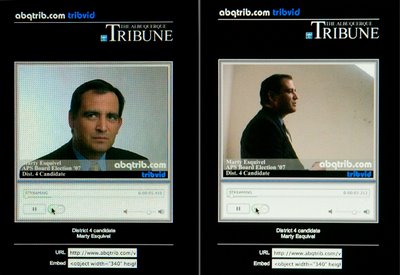
In the Marty Esquivel interview, as an example, the background is too bright, making his facial tones dark.
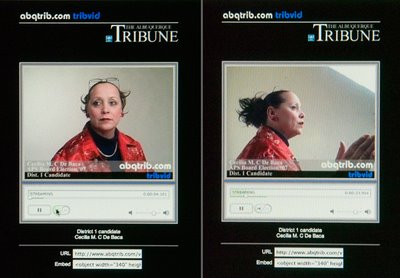
The C De Baca interview was more evenly lit and looked good. However, it has other problems related to framing.

The framing issue is greatest when shifting camera positions. The angle changes, from a head on shot, to a 90-degree profile, where the head size stayed virtually the same, are a problem. When I mentioned it to Amedeo he asked, “did it bother you?” I responded, that it did, and “then there was the rule.”

“There’s a rule,” he asked? That’s when I realized how much he was simply operating on raw talent.

In the visual community this kind of visual edit is called a jump cut or a junk cut. There is a rule that such changes require that the particular image change size by at least a third. Either the head is a third larger or a third smaller as compared to the shot before.

In the Esquivel interview, the head size framing issue is good.

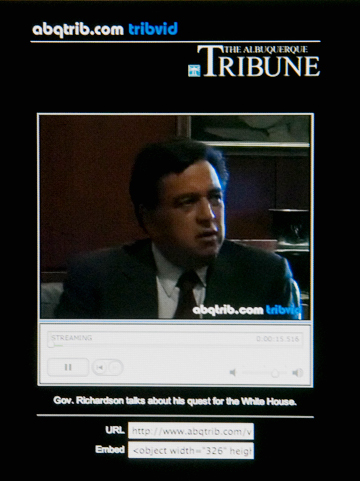
The interview with Gov. Bill Richardson was an absolute mess. There was no effective lighting strategy in the governor’s office. I suspected that there was no trained or experienced photographer present, as the camera was simply pointed in the general direction of Richardson and left to run. Amedeo admitted he shot the video.
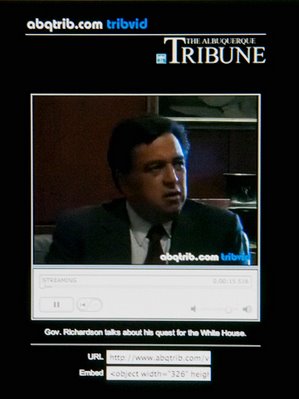
There was a huge amount of daylight streaming through an office window from the right side of the scene; the rest of the room was standard office lighting, Amedeo said. Failure to bring and set up lights caused the image to be very muddy. Compression software added to degrading the quality of the picture, Amedeo said.

If the technology is going to introduce problems, all the more reason to get the highest quality image possible.

The new video cameras are extremely seductive. They are capable of producing images that, us old-timers could only hope for from cameras in a fully lit studio. However, no matter how good the potential is, high production quality, lighting and sound, must be added to the incredible capabilities of the new technology.

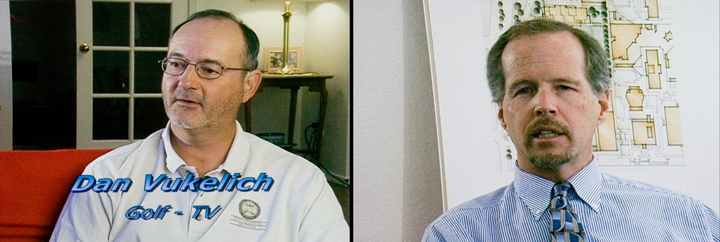
These are some screen shots of videos with strong window light I have lit for UNM course work. The shot on the left is of Dan Vukelich, a one time Tribune editor who went on to be an investigative producer at KOB TV Eyewitness News and is now the publisher and producer of New Mexico Golf – TV at http://www.newmexicogolftv.com/. The picture on the right is of Professor and Associate Dean for Academic Affairs at the University of New Mexico School of Engineering Charles Fleddermann, in his corner sun-drenched office. In both cases, the lighting was evened out and the picture improved from the ambient light.

The common thread of the Tribune’s error is with sound acquisition. Their approach was obviously to go on the cheap. The use of a single microphone, rather than using individual audio pick-ups for each participant, degraded the quality of their product. It was so bad that when the transcript of the interview was published, words were altered. An example: in answering the final question, Richardson was quoted in the transcription as saying, “…How can it help? Well, there's a lot of Hispanics in this country that may take some pride that one of their own is vying for president.” When in fact he said, “…that one of their own is running for president.”

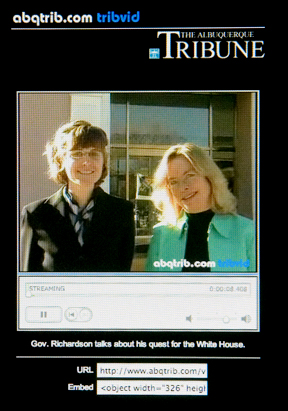
Tribune Managing Editor Kate Nelson, to the right side of the picture and Santa Fe Capitol Correspondent Kate Nash, two seasoned political reporters, had a sit down interview with Richardson in what should have been a premier piece. They asked good questions. However, the resulting video was a less than stellar audio and visual effort.

This was an admittedly rare opportunity to interview the elusive governor, but now that Richardson has announced his run for the Democratic presidential nomination, the greatest effort should have been made to produce a professional product. This video adds little over the print version. The editorial decision to run poor quality exposes a weak position, not one of strength. There comes a time when, as an editor, you simply have to admit that your journalist blew the assignment. It maybe a very difficult decision to own up to, but one of the distinctions between a professional and an amateur is that a professional won’t show you his bad work.

At a minimum, a small portable three instrument lighting kit, with stands, is required. It is an additional 10 pounds, but worth its weight in gold and golden light. Lighting a scene so that it doesn’t look like it has been lit, is an art form unto itself.

The Tribune also needs to invest in a variety of microphones, including four or five lavalieres and maybe a couple of wireless units, along with a portable audio mixer. Capturing good quality sound is also an art form.

Video work is not simply placing a camera in front of a subject. Letting a camera run as a reporter often does with a tape recorder, in order to capture accurate notes at a press conference or interview, is different. Video is a manned activity with a trained and experienced operator who can enhance the storytelling by controlling the camera. As Richardson moved, the camera did not follow. The wide-angle setting of the lens was set up to allow the governor to move around. Camera technique should replicate how humans interact while listening intimately to another person. If they move, the listener’s eyes will track the speaker. The camera should not be static.

There is a whole subset of skills associated with creating compelling video, that do not directly translate from still photography and definitely not from print media; radio experience will often time cover the sound component.

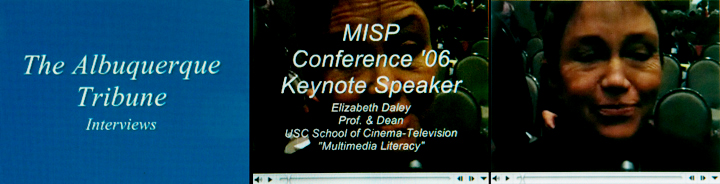
"We teach people how to write essays from the beginning of their schooling . . . but we don't teach people how to express themselves with media," said Elizabeth Daley, professor and dean of the University of Southern California School of Cinema-Television. "I think for anyone today in any field, you need to be able to do that. You also need to be able to understand how media works, because otherwise, you'll misread it all the time," Amedeo wrote, in a Jan. 16, 2006, article with an accompanying video clip for the Tribune, found on his web page http://www.michaelamedeo.com/.

Daley, spoke about the need for everyone to learn the language of the screen, in her presentation, “Multimedia Literacy,” as keynote speaker at the New Mexico Media Industries Strategy Project conference, held in early Jan. Amedeo’s video clip was fraught with the very problems she advocated overcoming. There was a great deal of distracting background noise and Daley was in a bad backlit situation.

Taking control of the environment: lighting it and acquiring good sound and using a tripod all increase the ease for the viewer to receive the information.

Here is an example of a conference situation where I took the head of the Experimental Program to Stimulate Competitive Research at the National Science Foundation, Dr. Sherry O. Farwell, left, into a separate room to interview him.

Dr. Sanjay Krishna, right, a UNM School of Engineering Associate Professor for Electrical and Computing Engineering at the Center for High Technology Materials, granted me an interview in one of his labs, where there was florescent lighting and a low hum from the equipment. By adding some lights and attaching a lavaliere microphone on his shirt, close to his mouth, the video looked and sounded good.

One might think that a major news outlet, like the Tribune, would understand the value of using a professionally trained and experienced videographer. I suspect Amedeo and his colleagues will improve fairly quickly through hit or miss.

I applaud the Tribune’s efforts. The elimination of the trial and error process might be expedited if Casaus were to reconsider my offer.
Sunday, February 11, 2007

I’d Rather Watch Sausage Being Made

What's wrong with this picture?

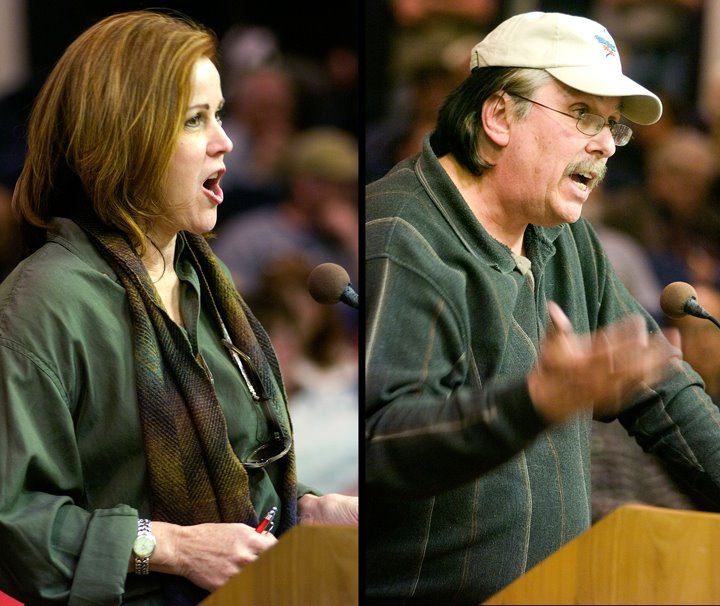
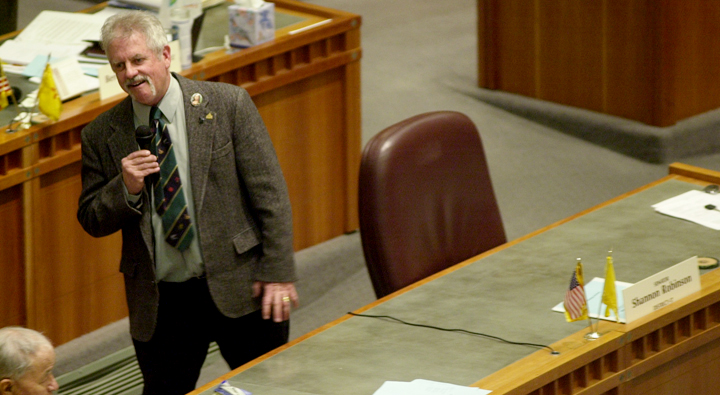
This is State Sen. Shannon Robinson, (D) Bernalillo County, District 17, during the recent cockfighting ban debate on the floor of the Senate. This piece of legislation, in particular, seemed like a forum for excessive grandstanding.

With existing laws against cruelty to animals and gambling, specifically outlawing cockfighting would seem superfluous. Except there is an exemption for cockfighting; it’s not against the law now. It’s actually allowed.
“K. The provisions of this section shall not be interpreted to prohibit cockfighting in New Mexico.”

The current law has a list of exceptions that make perfect sense:
“(1) humanely destroying a sick or injured animal; or
(2) protecting a person or animal from death or injury due to an attack by another animal.”
E. Extreme cruelty to animals consists of a person:
(1) intentionally or maliciously torturing, mutilating, injuring or poisoning an animal; or
(2) maliciously killing an animal.”

Senate Bill 10, sponsored by Sen. Mary Jane M. Garcia, (D) Dona Ana County, District 36, right, strikes the exception and prohibits cockfighting.

Sen. Phil A. Griego, (D) Los Alamos, Mora, Sandoval, San Miguel, Santa Fe and Taos Counties, District: 39 opposed the bill and argued strongly against the ban using the argument and suggesting that the 1848 Treaty of Guadalupe Hidalgo protected cultural activities, including cockfighting. However, article IX of the treaty delineates that the former citizens of Mexico, at the end of the Mexican-American War, were entitled to, “…the enjoyment of all the rights of citizens of the United States, according to the principles of the Constitution; and in the mean time, shall be maintained and protected in the free enjoyment of their liberty and property, and secured in the free exercise of their religion without; restriction.”

The Treaty of Guadalupe Hidalgo argument fails miserably as the other states that were covered by it: California, Arizona, Utah and parts of Colorado, all have outlawed cockfighting?

Another thought: I cannot think of any other “legal” activity that is so deeply underground. Could it be that supporters of cockfighting know that if they practiced their “sport” in the light of day, the general public would be even more outraged than they already seem.

The bill passed the Senate 31-11 and is on its way to the House, where has passed repeatedly.

So what's wrong with this picture?

There is an old saw that goes, there are two things you don’t want to see made: sausage and legislation.

It matters little what the debate is about. See fellow student Jo Fanelli’s blog at: http://web.mac.com/teamfanelli/.

I enjoy seeing politicians verbally turn themselves inside out trying to make language support logic to illogical propositions. The use of rhetoric and hyperbole are common devices in this linguistic exercise. It should be expected. Robinson, however, got so worked up that he misstated the law. I wouldn’t normally get upset about such a gaff, but he made a huge blunder.

In talking about the potential penalties associated with this bill, Robinson tried to point out that, because ultimately, upon a third conviction, the penalty was a fourth degree felony.

The Senate Judiciary committee had reduced the original penalties for a first conviction from a full misdemeanor, with a fine of $1,000, and or confinement in the county jail for a definite term less than one year, to a petty misdemeanor, carrying a fine of $500 and or jail time of up to six months. A second conviction would be a full misdemeanor.

A third and subsequent conviction would be a fourth degree felony, carrying a possible punishment of a fine of $5,000 and or up to eighteen months in the state prison.
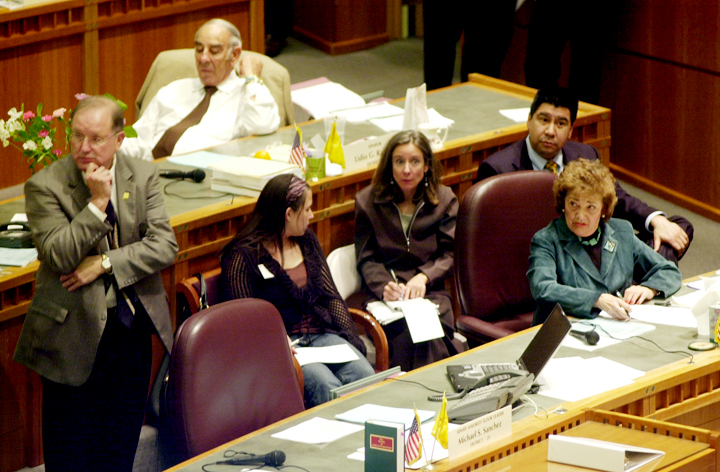
Robinson made the argument that because ultimately, upon a third conviction, the penalty was a felony, that felony rules applied to all cases; whether or it not it was a third offense.

He then went into hyperbole hyper-drive stating that one trying to enforce the ban would have to shoot the “felon” if they tried to escape a cockfighting event, whether they were owners of a bird or a child of a spectator.

What sets me off about this diatribe is that as a practicing attorney, a member of the state bar, Robinson could possibly get such a fundamental legal concept so completely wrong. The use of deadly force is only authorized when a felon is in the actual commission of a violent act that could kill or seriously injure another person or, while still armed, flees where they may continue their violent act. Then, and only then, may a person use deadly-force. What is so wrong about Robinson’s comment was it was made in the well of the Senate, while a number of students were visiting the gallery. They heard a prominent legislator make a statement, as if it were a fact of law.

I don’t call for censoring bad speech; I’m just raising the volume to say that Robinson’s comments were irresponsible because they are simply untrue. I am concerned that young impressionable minds will believe Robinson. How can Robinson justify the next “kid” who chases a car thief to recover his father’s stolen vehicle and shoots him, because “he’d heard a senator and lawyer say that was the law?”

After all that, I still had to stop at a Kentucky Fried Chicken to pick up some wings. No baloney!

Wednesday, February 07, 2007

Jerry T. Powell

What's wrong with this picture?

This is Jerry T. Powell, in 1978, when he was a lieutenant with the Albuquerque Police Department. At the time, he was the swing-shift commander of the Southeast Area Command. He would be promoted twice more, to captain and eventually to deputy chief. He was tough, but always friendly.Though we had our differences, ultimately he was a fair man.

He joined APD on Nov. 29, 1962, after serving in the U.S. Air Force. He retired from the city in June of 1988.

When I was president of the Albuquerque Police Officers’ Association, Powell would go out of his way to seek me out, in my office, whenever he had a planned change that might affect the working relationship with officers. He always got his way, not because of the simple showing of respect, but because of his thoroughness, attention to detail and he got it right. He would always quote the applicable sections of the contract, city and department regulations. He sought consensus, but didn’t demand it. It made him a rare breed.

So what's wrong with this picture?

Powell, 70, took his own life on Sun. Feb. 4., in Rio Rancho.

He always had the perfect uniform and motivated officers by ending his comments with “look sharp.” Same to you J.T., “Look Sharp!”

Friday, February 02, 2007

Nature Abhors a Vacuum

What's wrong with this picture?

In what seems a major change at the State Legislature, the Senate Conservation Committee moved a cockfighting ban measure out to the full Senate with a 5-3 do-pass recommendation. The committee has traditionally been the graveyard for other attempts to ban the “sport” in the state. If the bill clears the Senate and House and if the governor signs it, New Mexico will join every other state, except Louisiana, in outlawing game fowl fights.

The governor has joined Archbishop Michael Sheean, in supporting the ban. He is seen here leaving the state of the state address, opening the legislature a couple of weeks ago.


So what's wrong with this picture?

This is Pahl Shipley, the newly appointed Director of Communications for the Richardson for President campaign. Seen here, left, with the governor upon his return from his diplomatic effort to the Dufar region of Sudan. Shipley had been Richardson’s spokesman prior to announcing his run for president 12 days ago.

It seems Richardson has upset his otherwise friendly nationally syndicated radio talk show host, Don Imus, yesterday. Imus is a part time resident of Ribera, a small town northeast of Santa Fe, where he and his brother, Fred, run a ranch and summer camp. Imus insists it be called a "working ranch," for children suffering from cancer and other diseases.

Imus is upset with the governor for not moving quickly on helping transform an old schoolhouse in Ribera into a community center. Read all about it at http://joemonahansnewmexico.blogspot.com/ where you will be directed to a video and to Imus’ blog, http://imusblog.com/governor-bill-richardson-cancels-appearance-on-imus/; you can listen to the seven-minute rant. Richardson was scheduled to be on the show Thursday, but the flap caused the Democratic presidential candidate to cancel.

Imus, in addition to calling ‘Big Bill” fat, was particularly irritated with the governor’s staff, including Shipley. The "I man” called the campaign staff, “not ready for prime time,” when they insisted he apologize to Richardson.

Imus gave me a Spanish lesson as he taught me how to say, "Beso mi culo!” translation; “Kiss my Ass!”

If you worry that game fowl fighting is about to be outlawed; don’t fret, nature abhors a vacuum. Just stay tuned for more Imus – Richardson – in the morning. Feathers will surely fly.